Linen Thread & Sewing Notions
Click on images to enlarge them in separate windows.
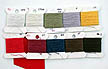
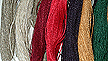
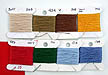
Linen thread uses a sizing system based on the lea. One lea equals 300 yards per pound. Thus a single ply 20 lea linen thread (expressed as 20/1) has 6,000 yards per pound. A 2-ply 20 lea linen thread (expressed as 20/2) has 3,000 yards per pound. All my linen thread is 2 ply. So 16/2 thread is 2,400 yards per pound, 20/2 thread is 3,000 yards per pound, 35/2 thread is 5,250 yards per pound, and 40/2 thread is 6,000 yards per pound. Visually the 16 and 20 lea threads look the same size, as do the 35 and 40 lea thread. An examination of extant period woolen coats and smallclothes for the common class of people and soldiers shows they were sewn together with unbleached or undyed flax linen thread between 35 and 60 lea. There are also records of linen thread of various colors being provided to uniforms. Thus whether you sew together your coat or smallclothes with natural or dyed thread in either case you are being authentic. Buttonholes were worked using a heavier thread such as 16 or 20 lea which would generally match the color of the cloth. Buttonholes on a wool garment usually were done with mohair or silk thread, on a linen garment it would be linen thread. Approximately 25 yards of thread is needed to assemble a coat, and an equal amount to work the buttonholes. If you are sewing a linen garment, then use a flax linen thread. For example a shirt or shift would be sewn with a linen thread of the matching color between 35 and 60 lea. The buttonholes and thread buttons would use a heavier thread such as 16 or 20 lea. |
To order any linen thread: click on this PDF icon and follow the instructions
on the top of the page.
 Linen Thread Order Form.pdf


![[Hook & Eyes]](notions/hook-eye.jpg)